Seek the structure
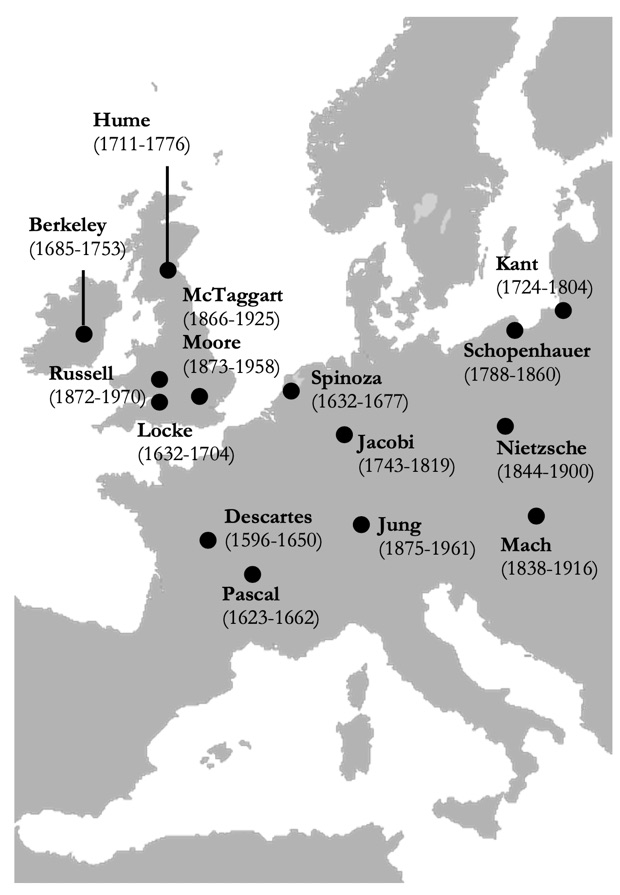
A long-form personal reading project on ontology, causality, foundational physics and consciousness taught me to compare competing explanations without hiding their uncertainty.
PhD electrical engineer · Lausanne, Switzerland
I work at the intersection of electric machines, multiphysics simulation, experimental validation and scientific computing, turning open-ended technical questions into models, prototypes and actionable conclusions.
Perspective
Engineering is one expression of a broader curiosity. I am interested in how ideas fit together, where assumptions come from and what makes an explanation withstand contact with reality.
A long-form personal reading project on ontology, causality, foundational physics and consciousness taught me to compare competing explanations without hiding their uncertainty.
From the Feynman Lectures and research papers to finite-element programs, I understand ideas most deeply when I can reconstruct them, test them and see where they fail.
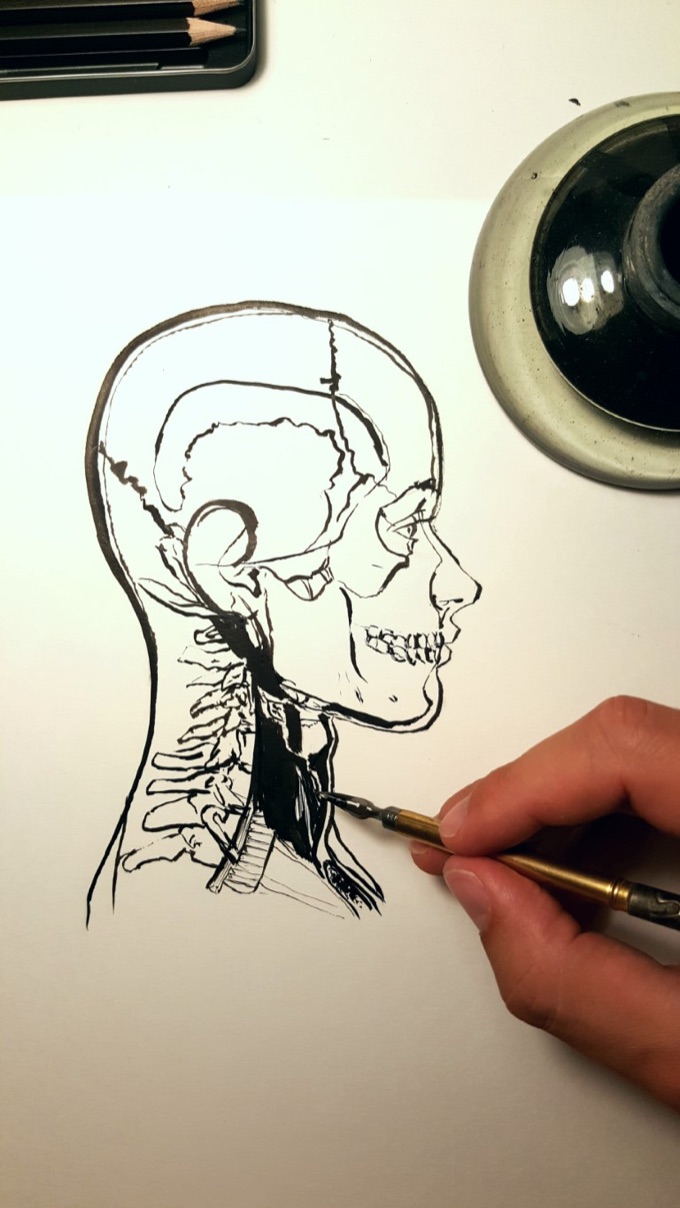
Drawing, painting, piano and guitar develop another kind of attention: sensitivity to form, rhythm, proportion and iteration. That creative discipline also shapes how I approach R&D.

Expertise
The most consequential design decisions rarely belong to one physical domain. My work connects the models, experiments and teams needed to understand the system as a whole.
Electromagnetic behaviour, performance, losses, actuation systems and motor-driven applications.
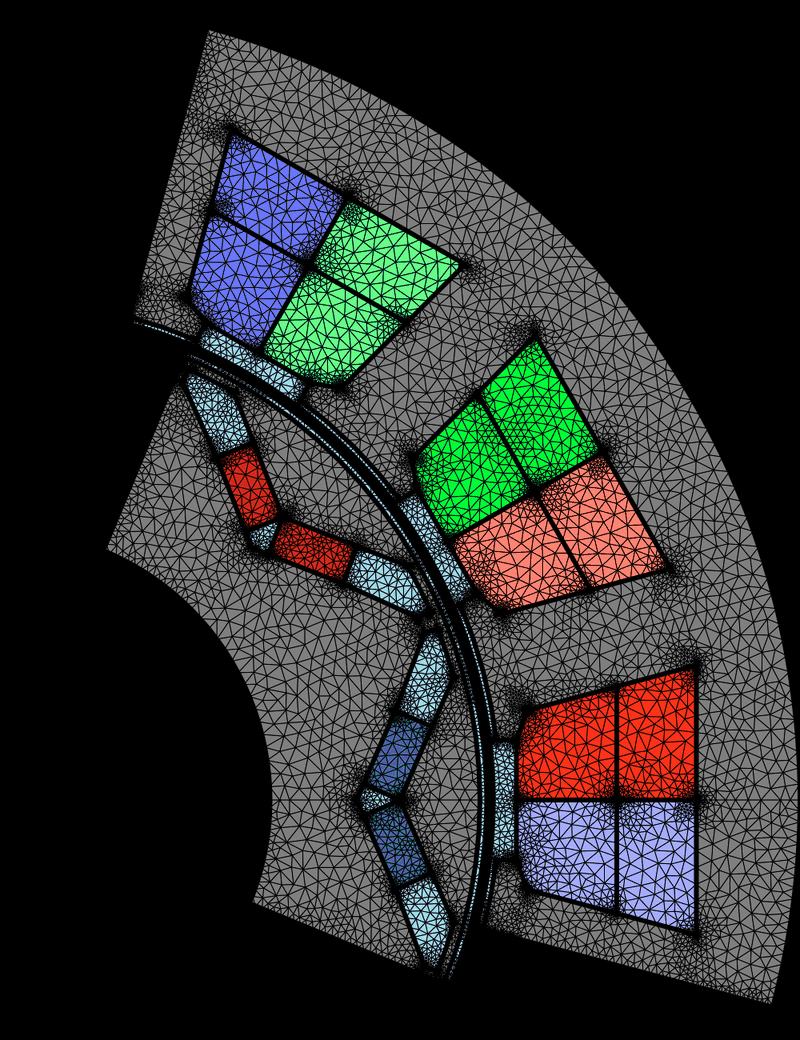
Electromagnetic, structural, vibro-acoustic, thermal and fluidic behaviour considered as connected design constraints.
Since 2021, outside my professional work, I have designed and built a native scientific-computing environment from first principles. The work began before modern LLM coding assistants and spans physical formulation, geometry, meshing, finite-element assembly, nonlinear solution, post-processing, performance, verification and scientific-software architecture.
Today, I use LLM-assisted workflows to iterate faster while retaining technical direction and numerical ownership through direct code review, automated tests, benchmarks and reference cases. The project continues to evolve with modern language, testing and architecture practices.
Surrogate and regression models, data analysis, LLM orchestration and tool-using agents built around traceable engineering computations.
Rapid prototypes, experimental design, test correlation, technology evaluation and evidence-based technical decisions.
Selected public work
Selected papers, a patent and an open benchmark showing how analytical modelling, multiphysics simulation, experiments and data-driven methods connect across my work.
Contribution to an international benchmark on data-driven multiphysics modelling of traction electric motors. I developed a conditional variational autoencoder for forward prediction and inverse motor design within an open, reproducible comparison framework.
Co-inventor on a drug-delivery device using a high-speed motor and centrifugal compressor, translating electromechanical design into a compact healthcare application.
View patent WO/2019/215173Design and experimental comparison of permanent-magnet machines for electrically assisted turbochargers, combining high-speed electromagnetic design, mechanical analysis and acoustic testing.
View the IEEE paperMultiphysics investigation of how pole and slot combinations influence electromagnetic forces, structural response and radiated noise in permanent-magnet synchronous motors.
View the journal paperDoctoral research connecting analytical models, finite-element analysis and experiments to study electromagnetic sources of vibration and acoustic noise in automotive permanent-magnet machines.
Read the thesis on HALComplete publication record
Engineering approach
A model becomes useful when its assumptions are explicit, its numerical behaviour is understood, and its predictions can inform, or survive, experimental validation.
Define the decision, constraints and required confidence.
Select the physics and assumptions that matter.
Turn the model into a calculation, prototype or experiment.
Challenge the result with data, alternatives and uncertainty.
Translate evidence into an engineering direction.
About
I am a PhD electrical engineer based in Lausanne, working on innovation in electric motors and motorized systems.
My experience spans electromagnetic, mechanical, thermal, NVH and fluid-dynamic analysis, together with scientific computing, rapid prototyping and experimental validation. I particularly enjoy multidisciplinary problems where modelling, physical testing and product decisions must agree.
My career has connected industrial R&D with universities, laboratories, startups and technology partners. I currently contribute to Sonceboz's open-innovation activities at EPFL.
Contact
Interested in electric machines, multiphysics R&D or research-to-industry collaboration? The simplest way to reach me is through LinkedIn.
Connect on LinkedIn